
Blog: Boxing Fitness


The Parry Playbook: A Guide to the 5 Types of Parry in Boxing
Master the art of parrying in boxing with this comprehensive guide, covering the five main types of parry used in the sport. Improve your defence and add variety to your technique with practical tips and strategies for blocking punches and setting up counterattacks.

7 Head Movements in Boxing
A boxer's ability to move their head is essential for both defense and offense in the ring. This post covers the seven head movements in boxing, from the slip to the duck, providing practical tips and techniques for each one.

Master These 7 Advanced Punches to Improve Your Boxing Skills
Advanced boxing punches are technique modifications designed to solve specific problems and improve overall skill by leveraging versatility, unexpected angles, and defensive counter-punching. These seven punches include the surprising low-to-high Up Jab, the guard-breaching Overhand, the body-focused Shovel Hook, the deceptive Bolo Punch, the counter-focused Split-Jab, the evasive Check Hook (with a pivot), and the hybrid Huppercut (hook and uppercut fusion).

The Art of Misdirection: 7 Basic Feints for Boxers
Master the art of misdirection in boxing with this informative post. Learn about seven basic feints that can be used to deceive opponents and set up punches, from the jab feint to the slip feint. Whether you're a beginner or an experienced boxer, this post has something for everyone looking to improve their technique and add variety to their boxing arsenal.

The Art of Control: A Comprehensive Guide to the 10 Types of Control in Boxing
Control in boxing is an advanced method of moving that subtly or explicitly influences an opponent's behaviour, with the primary purpose of setting up an attack or a counter-punch. These techniques range from non-contact methods like Distance Control (using footwork) and Stance Control (using feints) to contact-based methods applied to the opponent's body or guard, such as Hand Control, Head Control, and the most basic, Clinch Control.

How to Step and How to Skip
Footwork is the foundation of a boxer's movement, enabling efficient attack, defence, and energy conservation. The step and the skip are two fundamental techniques used to move while maintaining a balanced, ready stance.

How to Pivot
Pivoting is a critical boxing technique used to evade punches, create counterattack angles, and control the ring by turning the body and shifting the feet, which requires excellent balance and body control. Executed from the orthodox stance, the clockwise pivot plants the front foot and circles the rear foot out to change position, while the anti-clockwise pivot circles the rear foot inward, both manoeuvres being essential for repositioning the fighter without becoming flat-footed or exposing the body.

How to Roll
The roll, or bob and weave, is a versatile defensive boxing technique that involves lowering and moving the upper body in a 'U' shape to evade punches and create angles for counterattacks, requiring good footwork, balance, and body control. Learn the difference between the Lead Roll and the Rear Roll, the coaching points being to bend the knees, maintain sight of the opponent, and avoid common errors, like dropping the guard.

How to Slip
The slip is an essential boxing defence that involves subtly and quickly moving the head off the firing line to avoid an incoming punch, requiring fast reflexes and good anticipation. Executed from a proper stance, the Lead Slip and Rear Slip allow a boxer to evade damage and simultaneously create valuable counter-punching opportunities, serving both defensive and offensive purposes.

How to Block
Blocking is a fundamental boxing defence that uses the gloves, arms, and shoulders to deflect or absorb punches, protecting the boxer while also serving as an offensive tactic to disrupt an opponent's rhythm. Essential techniques include the Lead Block, Rear Block, and the Cover, all executed from a proper stance while avoiding common mistakes like reaching out, elbow flaring, or lifting the chin.

Primary Movements
Primary movements, including pushing, pulling, squatting, hinging, and carrying, are fundamental, essential movements that form the foundation for overall physical health and specialized boxing skills. The American Council on Exercise (ACE) classifies these movements into five categories: bend-and-lift, single-leg, pushing, pulling, and rotational.

How to Wrap Your Hands
Learn how to wrap your hands like a pro with this informative post. Discover the step-by-step process for wrapping your hands before a boxing workout or fight, including how to choose the right hand wraps and how to properly secure them to protect your hands and wrists.

How to Feint
Feinting is a crucial boxing technique used to deceive opponents, setting up powerful combinations or disrupting their defence, and requires quick reflexes and understanding of their tendencies. This post redefines a feint as a punch that deliberately stops short of the target, offering a practical way for boxers, partners, and coaches to safely and effectively train this essential skill on heavy bags and in padwork.

The 6 Basic Punches
The six basic punches are more complex than they appear, requiring precise timing, balance, and footwork to be effective, not just simple execution. A skilled boxer must utilize punches like the Jab to control the opponent, the Cross for maximum power, and the Hook/Uppercut to catch opponents off guard.

How to Shoulder-Roll
The Shoulder-Roll is a key defensive move performed from the specialized Philly Shell stance to deflect straight punches off the lead shoulder and set up a counterattack. What are the basic do’s and don’ts of the shoulder roll?

How to Uppercut
The Uppercut is a powerful, vertical punch thrown in an upwards arc, making it highly effective for catching an opponent off guard, especially a taller one, or serving as a potential finishing blow. To execute this punch, power is generated by rotating the hips and torso while maintaining proper body alignment, which also makes it an excellent exercise for working the core, arms, shoulders, and upper back.

How to Hook
The hook is a powerful, circular punch thrown in a sideways arc that targets the head or body of an opponent. It requires significant hip rotation and works the muscles in the arms, shoulders, and back, making it excellent for improving both skill and overall boxing fitness.

How to Cross
The Cross, or straight punch, is thrown with the dominant hand and is a powerful boxing punch that requires proper body alignment to be effective. This punch is an excellent full-body exercise that utilizes the arms, shoulders, and chest, while also demanding hip rotation and precise footwork for maximum power and fitness benefit.

How to Jab
The jab is the most essential punch in a boxer's arsenal, a quick, straight punch thrown with the lead hand that is highly versatile for both offense and defence. Offensively, it establishes range, controls the pace of the fight, and sets up combinations. Defensively, it can be used to block, parry, and disrupt an opponent's timing.
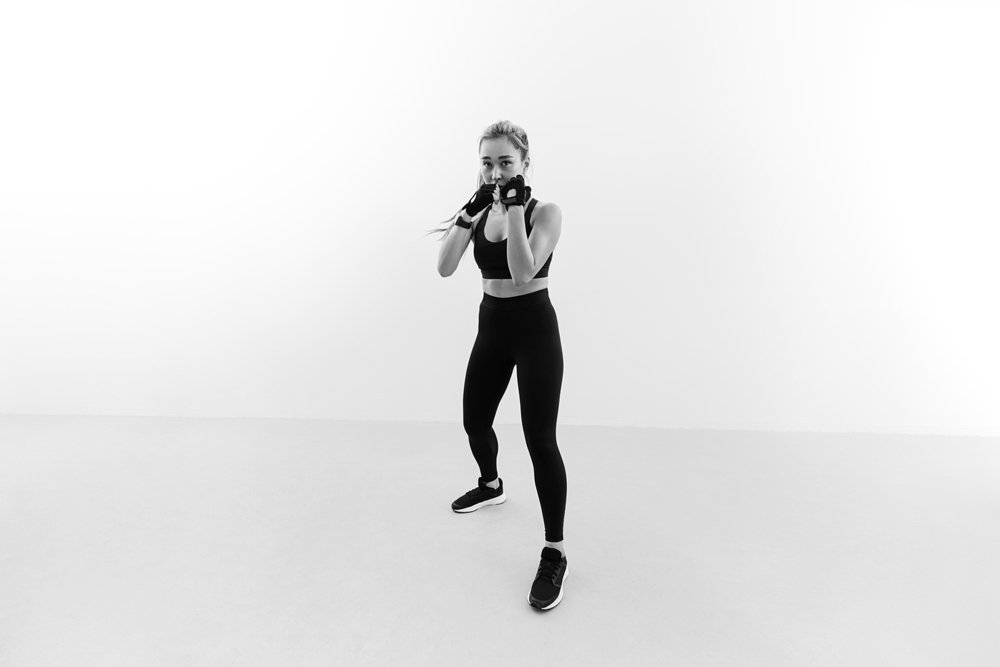
The Boxing Stance
The boxing stance is a carefully crafted position, essential for providing a balance of stability and mobility while maximizing a boxer's power and defence. Whether using the Orthodox (left foot forward) or Southpaw (right foot forward) stance, fighters must precisely manage foot positioning, weight distribution, and hand placement to optimize their approach for their style and opponent.